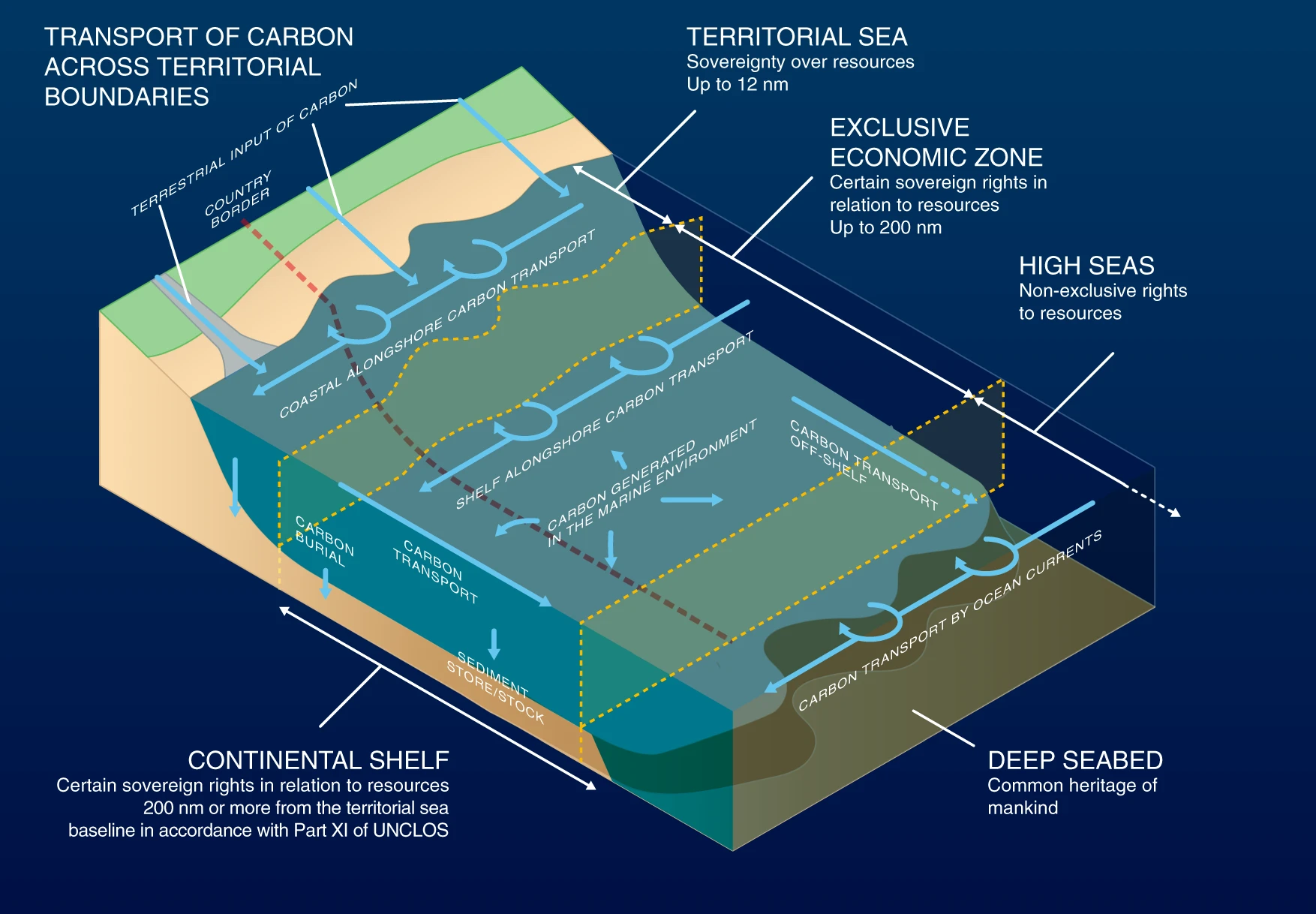
Carbon storage deep sea has been linked to Earth’s cooling over 4.5 million years, revealing important insights into climate change and geological processes.
Understanding Carbon Storage
Understanding carbon storage in the deep sea is crucial for grasping its impact on Earth’s climate over millions of years. The deep ocean serves as a significant reservoir for carbon, playing a pivotal role in regulating global temperatures.
Research indicates that deep-sea carbon storage has been linked to a cooling trend that has persisted for over 4.5 million years. This natural process involves the absorption of carbon dioxide from the atmosphere, which is then transported to the deep ocean, where it is sequestered for long periods.
Key factors contributing to effective carbon storage in the deep sea include:
- Biological Pump: The transfer of organic matter from the surface to the deep ocean.
- Ocean Currents: Facilitating the distribution of carbon-rich waters.
- Geological Structures: Providing stable environments for carbon retention.
This process is vital for understanding how Earth’s climate system has evolved.
The Science Behind Earth’s Cooling
The relationship between carbon storage in the deep sea and Earth’s cooling is a complex yet fascinating subject. Researchers have discovered that the deep ocean acts as a significant carbon sink, absorbing carbon dioxide from the atmosphere over millions of years.
This process plays a critical role in regulating the planet’s climate. Key factors influencing this mechanism include:
- Ocean Circulation: Deep-sea currents transport carbon-rich waters across vast distances.
- Biological Pump: Marine organisms convert atmospheric carbon into organic matter, which eventually sinks to the ocean floor.
- Geological Processes: Sedimentary deposits trap carbon, preventing its return to the atmosphere.
These processes have contributed to a cooler Earth by maintaining lower atmospheric carbon levels over the past 4.5 million years, highlighting the importance of carbon storage in the deep sea.
Geological Timeframes Explained
Geological timeframes are essential for understanding the relationship between carbon storage in the deep sea and Earth’s cooling. Over millions of years, the Earth’s climate has undergone significant changes influenced by various factors, including atmospheric carbon levels.
During different geological epochs, carbon storage mechanisms have evolved, allowing the deep sea to act as a crucial carbon sink. This process helps regulate global temperatures and maintain climatic stability. Key periods, such as the Paleocene-Eocene Thermal Maximum, provide insight into how elevated carbon levels affected global temperatures and how effective carbon storage in the deep sea can mitigate these effects.
The long-term data gathered from sediment cores reveals patterns and trends that illustrate the impact of carbon storage on climate stability, suggesting a profound connection between deep-sea carbon reservoirs and the cooling of Earth over geological timeframes.
Impact of Marine Ecosystems
The role of marine ecosystems in carbon storage deep sea has become increasingly significant in understanding Earth’s climatic shifts. Healthy oceans act as critical carbon sinks, absorbing vast amounts of carbon dioxide from the atmosphere. This process not only mitigates climate change but also influences global temperatures.
Recent studies highlight how various marine organisms, such as phytoplankton and deep-sea corals, contribute to this phenomenon. They sequester carbon in their biomass, which eventually sinks to the ocean floor, effectively removing carbon from the atmosphere for thousands of years.
Moreover, the degradation of these ecosystems poses a threat to their ability to store carbon. Protecting marine biodiversity is essential, as it plays a pivotal role in maintaining the balance of Earth’s climate system and ensuring the long-term viability of deep sea carbon storage.
Climate Change Implications
The implications of carbon storage deep sea are significant in the context of climate change. As global temperatures rise, the ability of the deep ocean to sequester carbon becomes increasingly vital. This natural process not only reduces the amount of carbon dioxide in the atmosphere but also plays a crucial role in regulating Earth’s climate.
Research indicates that the deep sea has acted as a long-term carbon sink, influencing temperatures and weather patterns over millions of years. The relationship between deep-sea carbon storage and global cooling highlights the importance of protecting these vital ecosystems.
As oceanic conditions change due to human activities, understanding the mechanisms behind carbon storage is essential. Scientists stress the need for further research to ensure that these natural systems continue to function effectively in mitigating climate change.
Research Methodologies
Researchers employed a variety of methodologies to investigate the role of carbon storage in the deep sea and its relationship with Earth’s cooling over millions of years. These methodologies included:
- Geochemical Analysis: Scientists analyzed sediment cores from the ocean floor to measure carbon isotopes and trace elements.
- Climate Modeling: Advanced simulations were used to recreate historical climate conditions and assess the impact of deep-sea carbon storage.
- Field Studies: In-depth oceanographic studies were conducted to observe current carbon storage processes in various marine environments.
- Comparative Studies: Researchers compared data across different geological periods to identify trends related to carbon levels and temperature changes.
These combined approaches provided compelling evidence supporting the theory that carbon storage in the deep sea has significantly influenced Earth’s climatic history.
Historical Climate Data
Recent studies have analyzed historical climate data to uncover the connection between carbon storage in the deep sea and Earth’s cooling over millions of years. By examining sediment cores and fossil records, researchers have gathered evidence that indicates a significant drop in atmospheric carbon dioxide levels correlating with deep-sea carbon sequestration processes.
Key findings suggest that during periods of intense glaciation, deep-sea carbon storage played a crucial role in regulating global temperatures. Notably, the data reveals:
- 4.5 million years of climate history illustrating the relationship between carbon levels and temperature fluctuations.
- The deep ocean’s capacity to store carbon effectively, helping mitigate the greenhouse effect.
- Impacts of marine life on carbon cycling, influencing long-term climate stability.
This evidence underscores the importance of understanding carbon storage in the deep sea as a natural climate regulator.
Future of Carbon Storage Solutions
The future of carbon storage solutions, particularly in the deep sea, holds promising potential for mitigating climate change. Researchers are increasingly exploring how these vast underwater reservoirs can serve as effective carbon sinks.
As our understanding of carbon storage deep sea techniques improves, several innovative strategies are emerging, including:
- Enhanced mineralization: This process involves converting carbon dioxide into stable minerals, which can then be safely deposited in deep-sea environments.
- Ocean fertilization: By adding nutrients, scientists aim to stimulate phytoplankton growth, which absorbs carbon dioxide during photosynthesis.
- Sub-seabed storage: Utilizing geological formations beneath the ocean floor to securely trap carbon emissions.
These methods not only address greenhouse gas emissions but also contribute to the overall health of marine ecosystems, paving the way for a sustainable future.
Recent studies have highlighted the importance of carbon storage deep sea as a natural mechanism for regulating the Earth’s climate. By understanding the processes involved in carbon storage deep sea, scientists hope to develop more effective strategies for combating climate change.
By Tiziana Luisetti, Silvia Ferrini, Gaetano Grilli, Timothy D. Jickells, Hilary Kennedy, Silke Kröger, Irene Lorenzoni, Ben Milligan, Johan van der Molen, Ruth Parker, Tim Pryce, R. Kerry Turner & Emmanouil Tyllianakis via Openverse
References
Related stories
Sewer works in Muff: Essential and Proven Improvements · Trump Brazil India mistake: What went wrong in his remarks? · ICE Barbie Flying Boudoir: What’s the Real Story Behind It?
2 thoughts on “Carbon storage deep sea: Proven link to Earth’s cooling”